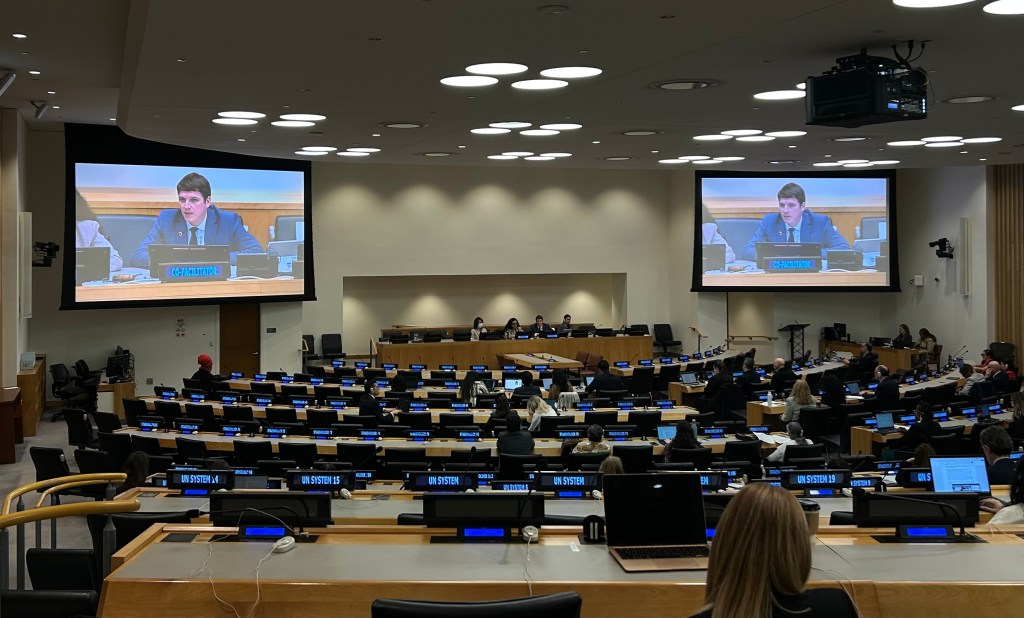
If you thought the Second World Summit for Social Development process was going to be a quiet affair, think again. An informal hearing on the Food for Thought Paper just served up a delicious multi-course meal of demands, determination, and seasoned no-nonsense truth bombs. Stakeholders did not come to play.
Migration? Not just a side dish. Stakeholders demanded a full spread, rights-based, and holistic treatment across poverty, decent work, and dignity. Migrants, refugees, and internally and forcibly displaced persons are not just “moving people”. They are workers, caregivers, and, yes, leaders. But only if we dismantle all forms of discrimination, invest in decent work, uphold labour rights, and actually centre their meaningful leadership.
Families matter? Oh honey, this was not your typical “nuclear family” narrative. We are talking unpaid care work, intergenerational solidarity, mental health, and yes, the tech divide that’s leaving grandparents and Gen Z equally confused. More love, less labels. Families are diverse and come in all shapes and sizes, and they all have rights, deserve support, and must be reclaimed.
Youth? They brought the energy and the receipts. From mental health to innovation as a public good, they are not waiting around to be consulted. They are demanding a seat at every table with a mic, a chair, and the power cord to reboot the entire system. Period.
Homelessness? Not invisible anymore. Stakeholders lit up the room with calls to centre those living without housing in the Political Declaration. Because let’s face it, a World Social Summit that forgets almost 2% of the global population is not just tone-deaf, it is plain wrong.
Children? Not just “our future”, they are also right now. They need nutrition, quality education, protection of their rights, and the actual ability to influence and lead decisions that affect their lives. And let’s not forget that budgets should feed more than just GDP growth, they should feed actual children. Wild idea, right?
Cooperatives? Turns out they are not just about local shops with good vibes. They are powerhouses of people-centred progress, and they want the spotlight, and a line or three in the Declaration, thank you very much.
Care work? From recognising the massive economic value of unpaid and underrepresented care work to dismantling legal and cultural barriers for care workers, stakeholders called out the system that runs on invisible hands and silent sacrifices, especially those of women and girls.
Digital divide? Still real. 2.6 billion people offline. And before we start worshipping AI like it’s a tech god, maybe let’s make sure kids actually have schoolbooks, shall we?
Older people? They are not fading into the background, they are front and centre. Ageing with dignity, inclusion, and rights was a rallying cry. And FYI, older women especially are tired of being overlooked in every single policy document. They are watching.
LGBTQIA+ folks? This is not a side conversation anymore, it is core to social development. They are demanding visibility, justice, rights, and liberation from the systems that oppress.
Climate, tech, education? Newsflash: they’re not separate chapters. They are interwoven. We cannot talk social development without linking just transitions, sustainable innovation, and education that actually prepares people for the world they’re living in, not the one we wish we lived in.
Care. Justice. Equity. Action. That was the vibe. And between side-eyeing vague commitments and calling for concrete, time-bound steps (with real money behind them, please), stakeholders made one thing clear: the Zero Draft better not be just another political poem.
After all, this Summit should not be a space to reaffirm old promises. From Copenhagen to Cairo, Berlin to Beijing, Nairobi to New York, the UN’s Member States have agreed to countless commitments and promises on social development. Now, it is time to do the work, invest in building the systems, and, dare we say, change the world through multi-stakeholder and intergenerational partnerships.
So to the drafters of the Political Declaration: get your pens ready, your language rights-affirming, and your references intersectional. Because the people? They have spoken. And they did not whisper…
You can watch the full recording of the Informal Hearing here and learn more about the Second World Summit for Social Development here.
 Intergovernmental Support
Leave a comment